


Diesel Repair
Diesel Laptops
I approached Diesel Repair as a working tool rather than a casual reference app. Developed by Diesel Laptops, it sits in the Auto & Vehicles category and is aimed at people who deal with heavy-duty truck repair information. The basic download is free, the content rating is Everyone, and the app runs on Android devices using version 7.0 or later. That makes it accessible to a broad range of phones and tablets, including older workshop devices.
My first impression is that this is most useful when it is treated as one part of a repair workflow, not as a magical answer to every warning light. A technician, fleet owner, independent operator, or mechanically confident driver may find it valuable when a truck problem needs to be understood before parts are ordered or a repair decision is made. The real benefit comes from using the information carefully, checking the truck’s symptoms, and separating diagnosis from guesswork.
The app has an average rating of 3.9 from 46 ratings, with 10 written reviews, and it has passed 10K+ installs. Those figures suggest a modest but real user base rather than a long-established mass-market tool. Its current version is 1.1.2, and it was released on November 26, 2024, so I would approach it as a relatively young product that may still feel like it is finding its rhythm.
Where people are most likely to get stuck
The first point of friction is expectation. A name like Diesel Repair can make someone expect a complete replacement for a professional diagnostic platform, a repair manual library, and a mechanic’s experience all at once. I would not use it with that assumption. An app can help organize repair thinking, but it cannot physically inspect wiring, hear a mechanical noise, verify fuel pressure, or confirm that a sensor is telling the truth.
That distinction matters especially with heavy-duty trucks, where one symptom can have several causes. A warning related to emissions, engine performance, or electrical behavior may be caused by a damaged connector, a poor ground, a failed component, or a problem earlier in the system. If I use the app to jump immediately from a symptom to a replacement part, I increase the chance of spending money without solving the underlying issue.
Related News

Why WhatsApp Messenger Still Makes Everyday Communication Feel Easy

Jurassic World: The Game Is the Better Dino Tycoon for Strategic Players

Threads in Real Life: Who Should Join, Lurk, or Leave

How SHEIN Turned Shopping Into an Endless Content Feed

How to Make Fortnite Feel Smarter on Mobile

Should You Switch to Microsoft Outlook on Mobile?
I would also expect some users to feel lost during their first session simply because repair applications require better preparation than ordinary phone apps. Before opening it, I would write down the truck’s make, model, engine details, warning messages, recent repairs, and the exact conditions in which the problem appears. “It runs badly” is not enough. “It loses power after warming up,” “the issue appears under load,” or “the warning returns after clearing” gives a much more useful starting point.
Another practical obstacle is the difference between a driver and a technician. A driver may want a plain explanation and a safe next step, while a technician may want a more structured path for testing. I find the app better suited to the second situation, or to a driver who already understands basic truck systems. Someone with no repair experience should use it to prepare questions for a qualified mechanic, not as permission to work around a safety-critical fault on the roadside.
The commercial model is also worth noticing before relying on it. The app is free to install, but in-app purchases range from $9.99 to $249.99 per item. That wide range means the free download should be viewed as an entry point rather than proof that every useful resource is included at no cost. I would check what a particular purchase unlocks and whether it fits the truck I am working on before paying. For a professional shop, a paid resource may save time; for an occasional owner, the same purchase may be difficult to justify.
Gallery
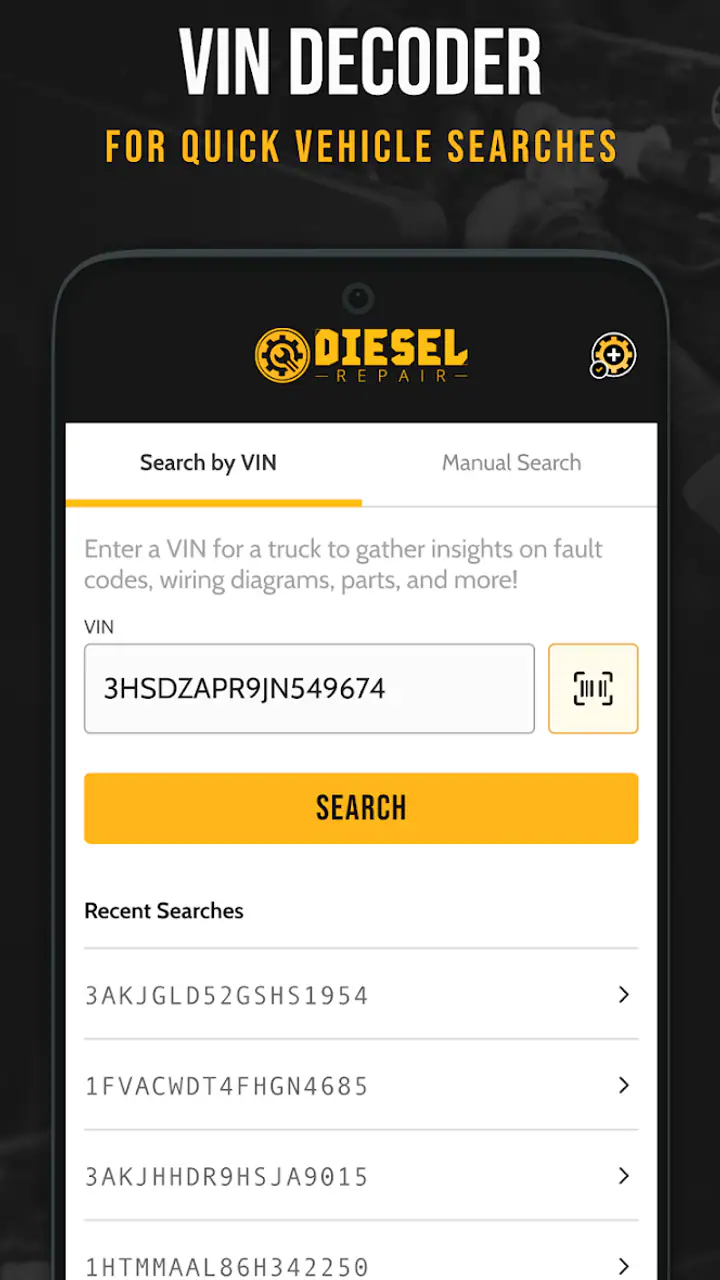
Setup checks that prevent avoidable confusion
I would begin with the simplest check: confirm that the phone or tablet is running Android 7.0 or newer and has enough battery for the work session. A workshop is a poor place to discover that an old device cannot install the current version. I would also update the app before beginning a diagnosis, because the current version is 1.1.2 and a repair workflow can become confusing if the device is running an older build.
Next, I would make sure the device has a stable connection when installing the app, signing in if required, or accessing any content that depends on an online connection. If a screen takes too long to load, I would first test another ordinary app or webpage. That simple comparison tells me whether the problem is likely to be the app or the workshop’s Wi-Fi, mobile signal, or device settings.
I would avoid doing the initial setup with greasy gloves or while standing beside a running engine. Entering vehicle information carefully is more important than doing it quickly. A wrong engine selection or an incomplete vehicle description can send the entire investigation in the wrong direction, and no troubleshooting guide can compensate for incorrect starting information.
One useful habit is to keep a small written record beside the device. I would note the original symptom, any fault description, the checks already completed, and the result of each step. This prevents circular troubleshooting. It also makes the app more useful because I can compare its guidance with what has actually happened instead of repeatedly rereading the same information.
For a fleet, I would set up a consistent naming and note-taking routine outside the app as well. Record the vehicle identifier, mileage or operating hours when relevant, and the date of the problem in a separate maintenance log. That is not a claim about a built-in feature; it is a practical safeguard. If the phone is replaced or another mechanic takes over, the repair history remains available.
I would also decide in advance what the app is being used for. There is a major difference between identifying possible causes, preparing for a shop visit, checking a repair procedure, and deciding whether a truck is safe to continue driving. Keeping that purpose clear reduces the temptation to treat a general explanation as a definitive diagnosis.
Recovering a workflow when something goes wrong
When an app-based repair session stalls, I prefer a short recovery sequence rather than repeatedly tapping the same screen. First, I close and reopen the app. Then I check the connection, confirm that the device has sufficient storage and battery, and restart the device if the problem continues. These are ordinary steps, but they separate a temporary phone issue from a repeatable problem inside the application.
If information appears inconsistent, I return to the vehicle details and the original symptom rather than forcing the process forward. I would compare the truck’s engine identification with the vehicle documentation and check whether the warning or behavior was recorded accurately. This is especially important when a truck has had an engine, control module, wiring harness, or other major component replaced during its life.
A helpful recovery technique is to divide the job into two tracks. On one track, I record what the truck is doing. On the other, I record what the app suggests checking. If the suggestions do not match the observed behavior, I pause and verify the basics: power supply, connectors, grounds, fuses, fluid levels, visible damage, and recent work. I would not keep changing parts simply because the first theory did not fit.
For example, imagine a truck that loses power during a delivery route. I would use the app to organize possible causes, but I would also write down whether the loss happens on hills, after the engine reaches operating temperature, during rain, or only when the fuel level is low. Back at the yard, I could inspect obvious connections and review the repair path with a technician. That combination is much stronger than trying to diagnose the problem from a single description while parked on the roadside.
If a paid section does not behave as expected, I would first confirm that the purchase was made through the same account and device environment used during setup, then restart the app and check the connection. I would keep the receipt or transaction record available when contacting support. I would not repeatedly purchase the same item just because access did not appear immediately.
There is also a safety boundary during recovery. If the truck has a serious braking, steering, overheating, fuel, electrical, or engine-running problem, I would stop treating the phone as the main solution. The app can help me communicate what happened, but roadside safety and professional inspection come first. A repair reference is useful only when the vehicle and surroundings are safe enough for the next step.
When the app is not the cause
Many apparent app problems are actually information problems. If a search produces an unhelpful result, the issue may be that the symptom was entered too broadly or the vehicle details were incomplete. I get better results from describing the condition precisely and using the truck’s actual terminology where I know it. I would avoid mixing several unrelated symptoms into one investigation.
Device performance can create another false diagnosis. An older Android phone may open the app slowly, struggle when storage is nearly full, or lose its connection when the screen sleeps. Before blaming Diesel Repair, I would restart the phone, close unnecessary apps, free some storage, and test the same connection elsewhere. If other apps also fail, the repair app is probably not the real source of the trouble.
Vehicle data can be misleading too. A stored fault does not always mean the related component is defective. It may point to an electrical condition, a communication issue, or a symptom caused by another system. I would treat the app’s information as a map for testing, not as a parts-ordering command. This is one of the most important habits for avoiding unnecessary repair costs.
The app is also not the right choice for every user. If I only drive a passenger car and want basic maintenance reminders, a general vehicle app would be simpler. If I run a large repair operation that already depends on established diagnostic hardware, manufacturer documentation, and formal service procedures, I would compare this app carefully with those existing tools before making it central to the business.
It may also be a poor fit for someone who wants a completely offline reference or who expects every truck configuration to be covered in exactly the same depth. I would test the free experience with one real, non-urgent problem first. That gives me a better sense of whether the available material matches my vehicle and working style before I commit to an in-app purchase.
On the other hand, it makes sense for an independent diesel technician who wants a portable starting point, a fleet manager who needs to understand a reported issue before authorizing work, or an owner-operator who wants to communicate more clearly with a repair shop. In those cases, the app’s value is not just the information on the screen. It is the structure it can bring to a messy conversation about symptoms, tests, and next actions.
My practical verdict after weighing the trade-offs
I see Diesel Repair as a focused tool for heavy-duty truck troubleshooting, not a substitute for a scan tool, factory-level service information, or hands-on inspection. Its free entry point makes it easy to try, and its Everyone rating means it is not presented as restricted content. The developer, Diesel Laptops, has chosen a clear niche, which is more useful to me than a vague vehicle app trying to cover every type of transport.
The strongest way to use it is deliberately. Prepare the truck information, describe the symptom precisely, keep notes, verify basic mechanical and electrical conditions, and treat each suggestion as a reason to test rather than a final answer. That workflow also makes it easier to identify whether a problem comes from the vehicle, the device, the connection, or the app itself.
I would recommend trying the free version before considering the paid items. The available purchase range can be reasonable for a shop that regularly works on heavy-duty trucks, but it deserves a business decision rather than an impulse purchase. Occasional users should ask whether the information will solve a current problem or remain useful across future repairs.
My final view is cautiously positive. The 3.9 average shows that the experience is not universally smooth, and the relatively recent release means I would allow for some growing pains. Still, for the right audience, it can turn an unstructured truck complaint into a more organized investigation. Use it as a repair companion, not as the mechanic standing beside the vehicle. With that expectation, it is worth trying for diesel-focused work; without it, a user may find the setup, interpretation, and purchase decisions more frustrating than helpful.
FAQs for Diesel Repair
What is Diesel Repair, and who is it designed for?
Diesel Repair is a mobile reference and troubleshooting app aimed at diesel vehicle owners, mechanics, technicians, and students. It can help users understand common diesel-engine components, maintenance procedures, fault symptoms, and repair-related information. Before downloading, keep in mind that it should be treated as a support tool rather than a replacement for a qualified mechanic, manufacturer documentation, or professional diagnostic equipment.
Can Diesel Repair diagnose problems automatically?
Diesel Repair may provide useful repair information, symptom references, and guidance for identifying possible causes of engine or system problems, but users should not assume that it performs a complete automatic diagnosis. Diesel faults can involve fuel injection, sensors, turbochargers, electrical systems, emissions equipment, or mechanical damage. Confirm any suspected issue with proper testing, service manuals, and suitable diagnostic tools before replacing parts.
Does Diesel Repair work without an internet connection?
Offline availability depends on the specific version and the information included by the developer. Some reference content may remain accessible after installation, while other sections, updates, images, or online resources may require an internet connection. If you plan to use the app in a workshop or remote location, open its main features after downloading and check whether the required repair information is available offline.
Is Diesel Repair suitable for beginners with no mechanical experience?
Beginners may find Diesel Repair useful for learning terminology, understanding basic diesel systems, and researching common maintenance topics. However, some procedures can involve high fuel pressure, hot engine components, moving belts, batteries, and specialized equipment. Read instructions carefully and avoid attempting repairs beyond your skill level. For safety-critical work, consult a trained technician and follow the vehicle manufacturer’s procedures.
Is Diesel Repair free to download, and are there any limitations?
The download price and available features can vary between Android and iOS, as well as between app versions. Some editions may be free, while advanced content, advertising removal, subscriptions, or in-app purchases could apply. Check the store listing before installing to review the current price, permissions, supported devices, update history, and privacy information. Also verify that the app covers your diesel engine or vehicle type.
Pros
- Useful for learning diesel engine repair basics and terminology.
- Can help identify common engine components and maintenance tasks.
- Convenient reference for mechanics working away from a workshop.
- May support troubleshooting before seeking professional assistance.
- Practical resource for students and beginner diesel technicians.
Cons
- Repair information may not cover every engine make or model.
- Some procedures could be too general for complex mechanical faults.
- Technical accuracy may vary between topics or updates.
- Users still need proper tools and hands-on mechanical experience.
- Following advice incorrectly could cause damage or safety risks.


